When a police officer screws up, the officer owns it.
If he violated policy, used bad judgment, lied, mistreated somebody, failed to do the job, or made a decision he should’ve known better than to make, supervision shouldn’t become a way to explain that away. But once I understand what the officer did, I want to know something else too: what did his sergeant know, and when did he know it?
Sometimes an officer does something completely out of character, hides misconduct, ignores clear direction, or makes a decision nobody reasonably could’ve predicted. That happens. A supervisor can train, coach, inspect, correct, document, and still have an officer make a reckless or dishonest choice. Other times, the final incident is only the first time the rest of the organization is forced to look at a problem the shift has already been watching for months.
That’s when I start looking backward. Were there complaints nobody connected? Reports that kept coming back wrong? Attitude problems everybody knew about? Training deficiencies that never got followed up on? Supervisors talking privately about the officer without ever putting anything on paper?
Subscribe to Field Notes
The stories and ideas I don’t want you to miss.
At that point, I’m no longer asking only whether the officer made a bad decision. I’m asking whether the department had already learned to live with a pattern.
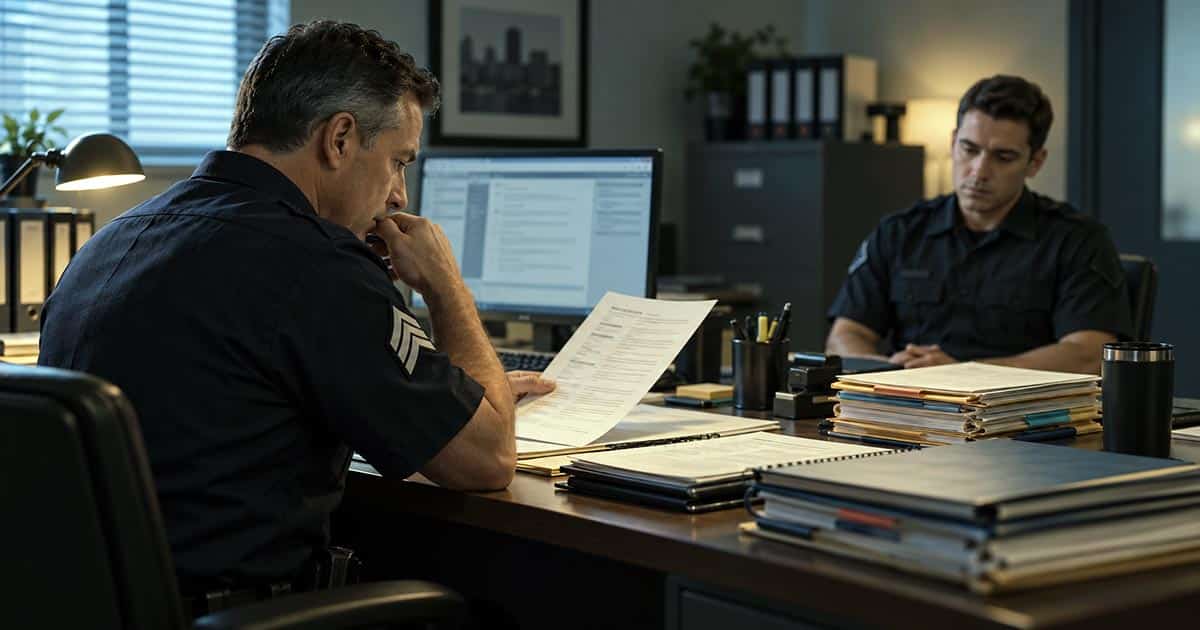
First-line supervisors are closer to officers than almost anybody else in the chain of command. They read the reports, hear the radio traffic, see how officers handle calls, and watch what happens after somebody gets corrected. I expect a sergeant to know who can work independently, who needs more direction, who gets careless, who gets defensive, and who keeps coming back with the same problem.
I may know what’s in an officer’s personnel file. I expect the sergeant to know what that officer looks like on a Tuesday night when nobody important is standing nearby.
That’s why I put so much weight on first-line supervision. It has to be more than approving timesheets and answering the phone when somebody asks for a boss. If the first time a sergeant realizes an officer has a serious performance problem is when the complaint lands on my desk, I want to know why.
Performance evaluations are part of that too. I don’t get much value from them if supervisors use them to avoid uncomfortable conversations. If every officer gets rated as excellent because nobody wants to document a problem, the department is building a record that doesn’t match what its own supervisors are saying privately.
Then something serious happens, I open the file, and somehow the officer everybody had concerns about has three years of glowing evaluations. I don’t think that’s fair to the officer either. If the department has told somebody for years that he’s doing great, we don’t get to suddenly announce after one major incident that he has always been a problem.
If there are concerns, I want them addressed while there’s still a chance to correct them. I don’t use evaluations as punishment. I want them to be an honest record of performance, including what somebody does well and what still needs work.
Complaints need some judgment too. I don’t treat a complaint as proof that an officer did something wrong. Police officers get complaints for doing completely lawful and professional things, and treating every complaint like misconduct would create another problem.
What I do expect supervisors to notice is repetition. One complaint about rudeness may tell me very little. Several unrelated people describing the same kind of behavior gets my attention, even if none of those complaints by itself resulted in discipline. I don’t want supervisors assuming guilt, but I also don’t want them pretending every complaint exists in isolation.
The same goes for informal correction. I think supervisors should handle a lot of small problems without turning everything into discipline. Sometimes an officer needs a conversation, some retraining, a report kicked back with an explanation, or somebody to say, “You handled that badly. Here’s what I expect next time.”
But if the same issue keeps coming back, eventually there needs to be a record of that. Otherwise the department can have the same conversation five times while the paperwork says nothing ever happened. Then the sixth incident becomes serious and everybody starts asking why nobody addressed it sooner. Maybe somebody did. The problem is they handled it in a way that disappeared as soon as the conversation ended. If an officer is being corrected, the officer should know what the problem is, what needs to change, and what happens if it doesn’t.
None of this requires some expensive early-warning system. A large agency may use software to track complaints, preventable crashes, missed court, weak reports, repeated policy violations, training failures, or the same corrective issue coming back again and again. A small department may have to rely much more on supervisors who actually know their people and pay attention to what keeps showing up.
Either way, I don’t want to need a viral video, a lawsuit, a termination, or a criminal case before somebody connects dots that were already there.
I also don’t think every bad decision by an officer belongs to the sergeant. That argument falls apart pretty quickly. Sometimes there were no warning signs. Sometimes the officer deliberately concealed what he was doing. Sometimes the supervisor did exactly what he should’ve done and the officer ignored it anyway.
Blaming the sergeant just because he wears stripes is lazy accountability. Pretending supervision has nothing to do with the review can be just as lazy when everybody on the shift knew there was a problem, reports kept getting kicked back, complaints were stacking up, the same coaching kept happening, and the evaluations still said everything was fine.
When something serious happens, I start with the officer. What happened? What did he do? What should he have done differently? Then I move one level up. What did the sergeant know? What should he reasonably have known? Were there previous concerns? Were they documented? Was the officer coached? Was training provided? Did the supervisor raise the problem? Did anybody follow up?
If the facts point higher, I keep going. Did command know? Did we have an evaluation system anybody trusted? Were supervisors encouraged to document problems, or did leadership make every correction so painful that people learned to keep quiet? Did somebody protect an officer because dealing with the problem would’ve been inconvenient?
Accountability shouldn’t stop at the lowest-ranking person we can discipline and call the problem solved. The officer still owns what he did. I still want to know what the sergeant knew.