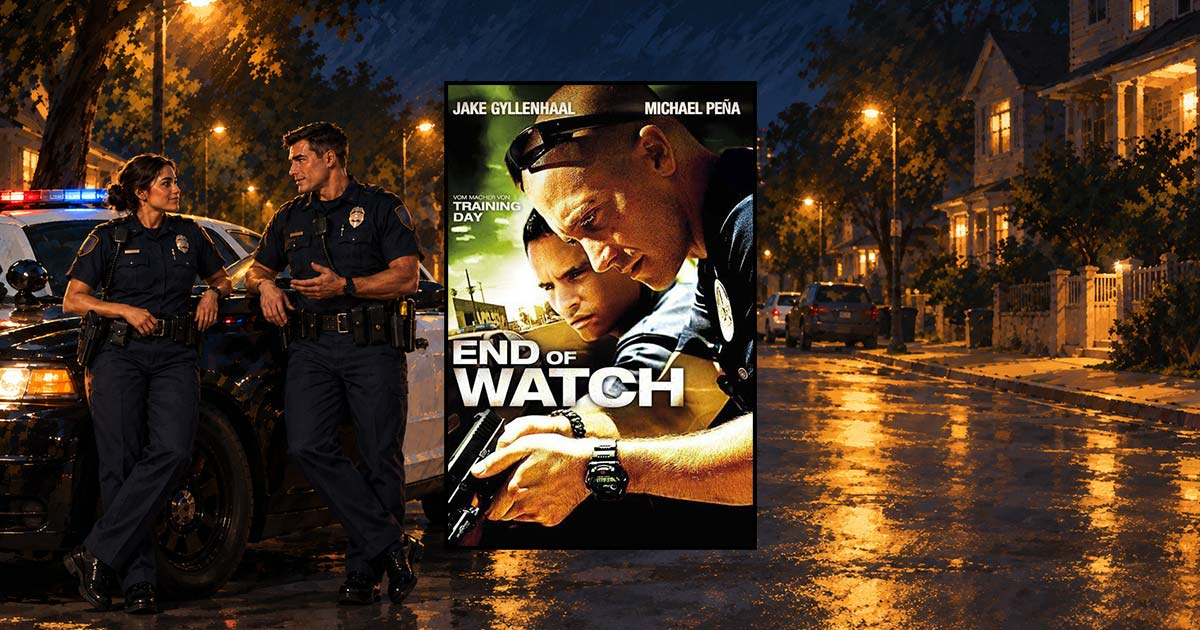
A lot of police movies make patrol look like one long emergency. A traffic stopA temporary detention of a driver and vehicle by law enforcement to investigate a suspected traffic or criminal violation or another lawful concern. becomes a chase, a disturbance turns into a major investigation, and every routine call seems to connect to something bigger.
End of Watch does plenty of movie stuff too. I wouldn’t use it as a training film, and I wouldn’t defend every tactical decision in it. But the relationship between Brian Taylor and Mike Zavala feels familiar in a way a lot of police movies don’t.
The part I believe isn’t the action. It’s the time in the car.
Taylor and Zavala spend a lot of the movie doing ordinary things together. They joke, argue, complain, talk about family, handle routine calls, and get on each other’s nerves. None of that feels like filler because that’s where the partnership actually gets built.
Subscribe to Field Notes
The stories and ideas I don’t want you to miss.
That’s also how it works on patrol. Spend enough shifts with somebody and you start learning how they handle frustration, what they notice, what they miss, when they stay calm, when they start getting worked up, and when they see something you don’t.
Most of the job will never make a movie trailer. It’s driving, reports, waiting, eating when you can, talking after a call, and going back out again. But those hours teach you whether the person beside you is somebody you can depend on.
After a while, a good partner becomes predictable in useful ways. You know how they’re likely to read a situation because you’ve watched them make decisions before. You have a pretty good idea when they’re going to step in, hang back, talk, move, or call for another unit.
That doesn’t replace communication. It gives communication a head start. A short instruction means more when the other person already understands how you think and what you’re probably seeing. When things speed up, you aren’t trying to learn each other at the same time you’re trying to deal with whatever is in front of you.
End of Watch gets that right. Taylor and Zavala don’t suddenly become coordinated because the story turns dangerous. The movie has already spent all that quiet time showing them becoming familiar with each other.
What it also gets right is that partnership isn’t the same thing as friendship. Taylor and Zavala are close friends, and that makes the movie hit harder. Real partners don’t always have that relationship. I’ve worked well with people I wouldn’t have spent much time with outside of work. I’ve also liked people personally that I didn’t especially trust under pressure.
Those are two different judgments.
The job requires reliability. I need somebody who communicates, does his part, uses decent judgment, and doesn’t make a difficult situation harder because now I’m managing him too. Friendship can make that relationship better, but it can also make things worse if loyalty starts replacing judgment. Being close to somebody shouldn’t make you less willing to tell him he’s wrong.
Sometimes your partner has the best view of you. He’s standing close enough to see when you’re angry, tired, embarrassed, frustrated, or too wrapped up in something to judge it well. If there’s real trust between you, telling you to slow down or rethink what you’re doing shouldn’t be treated as betrayal.
That’s part of partnership too.
It doesn’t mean lying for somebody, hiding misconduct, or defending a bad decision because your friend made it. A good partner should be willing to help keep you from making the mistake, not help you explain it away afterward.
That’s also why the ending of End of Watch works as well as it does. I won’t walk through it because the movie is better if somebody hasn’t had every detail spoiled. But by the time the story gets there, we’ve already watched the jokes, arguments, family conversations, routine calls, and all the hours that looked ordinary while they were happening.
The movie doesn’t have to suddenly convince us these two men matter to each other. It already did that. That’s what End of Watch understands about partnership better than most police movies. The critical incident isn’t where the relationship gets built. It’s where you find out what all the ordinary days produced.