Most people don’t spend much time thinking about how to file a police reportThe official written record of an event reported to or handled by law enforcement. It may include statements, observations, actions taken, and identifying information. until something happens and they need one. Then the questions start. Who do I call? What information do I need? Do I need proof? What if I don’t know exactly what crime was committed?
The good news is that you don’t need to figure all of that out before you call us. You don’t need to know whether what happened was theft, fraud, criminal mischief, harassment, or some other offense. You don’t need to know what charge might apply, and you don’t need to have the case solved before you make the report.
People sometimes hesitate to call because they aren’t sure whether they have enough information. Maybe something was stolen, but they don’t know who took it. Maybe they suspectA person whom investigators reasonably believe may have been involved in an offense. Being identified as a suspect is not a conviction. fraud but haven’t received all the records from their bank. Maybe they know something happened but aren’t sure whether it was actually a crime.
Tell us what happened. We’ll start there.
Subscribe to Field Notes
The stories and ideas I don’t want you to miss.
The National 911 Program defines an emergency as a situation requiring immediate assistance from police, fire, or an ambulance.
Who to call and where to make the report
If someone is in danger, a crime is happening right now, or the situation needs an immediate police, fire, or medical response, call 911. If the situation isn’t an emergency, use the non-emergency number for the law-enforcement agency that serves the area where the incident happened.
If someone breaks into your vehicle while you’re visiting another city, for example, you would normally start with the agency that covers the place where the vehicle was broken into rather than the department where you live.
If you’re not sure whether your situation needs an emergency response, explain what’s happening to the dispatcher and let them help determine the appropriate response.
Dispatchers may ask several questions before sending an officer. Those questions aren’t intended to delay help. They help the call-taker figure out where the problem is, what is happening, who is involved, what responders may be walking into, and what kind of response is needed.
Some things are more complicated. Identity theft, online fraud, and crimes involving several locations may involve more than one jurisdiction. If you’re unsure which agency should take the report, call the department where you believe the incident occurred and explain the circumstances. They can usually help you determine where to start.
For identity theft, the Federal Trade Commission also operates IdentityTheft.gov, where you can file an FTC Identity Theft Report and develop a recovery plan. Depending on your circumstances, you may also need a police report.
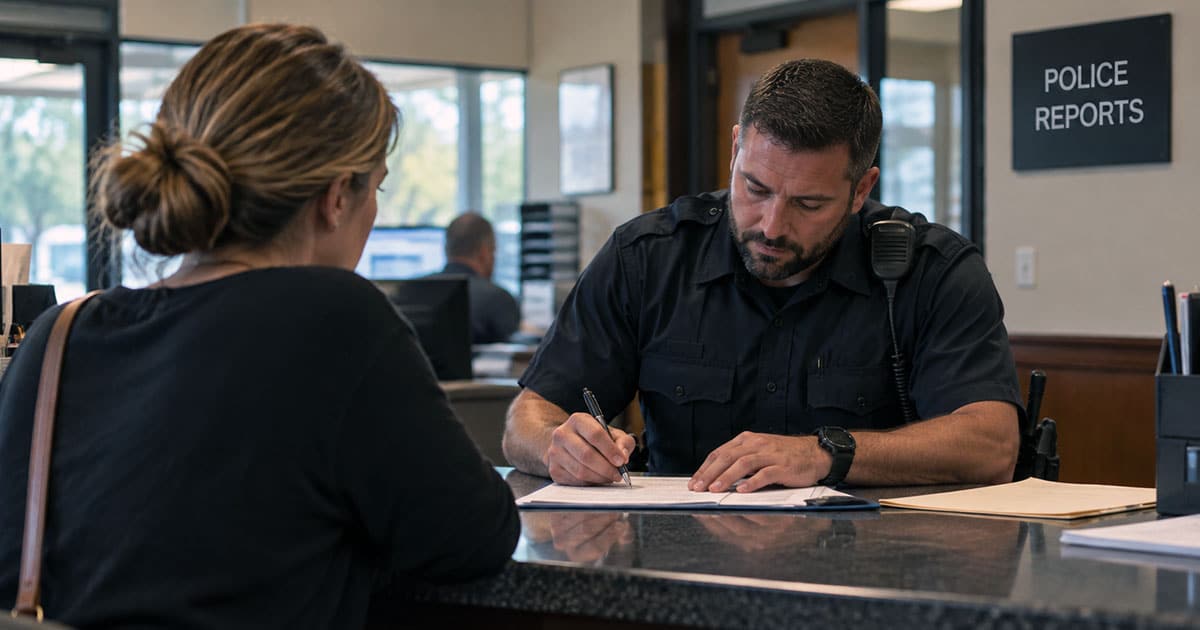
Departments handle non-emergency reports differently. Some send an officer to your location, some take reports at the station, and others offer telephone or online reporting for certain incidents. Calling the department’s non-emergency number is usually the easiest way to find out which option applies.
What information should you have?
Before making a non-emergency report, it helps to gather whatever information you already have. That doesn’t mean you need to spend hours collecting evidenceInformation or an item that may help prove or disprove a fact in an investigation or court case. or delay contacting the police while you look for something.
Depending on what happened, useful information may include:
- Your name and contact information
- Where and approximately when the incident happened
- A basic account of what occurred
- Names or descriptions of people involved
- WitnessA person who saw, heard, knows, or can provide information about an incident or fact under investigation. names and contact information
- Vehicle descriptions or license plate numbers
- Descriptions and serial numbers of missing property
- Receipts or other proof of ownership
- Photographs or video recordings
- Relevant text messages, emails, or screenshots
- Bank statements or transaction information in fraud cases
You won’t need everything on that list. Reporting a stolen bicycle is different from reporting several unauthorized bank transactions. Bring what applies to your situation.
If you have photographs, messages, video, or other records, preserve the originals when possible. Don’t delete an entire message conversation because you’ve already taken screenshots. If a neighbor has a camera that may have recorded something, let the officer know.
The same applies to physical evidenceA tangible item connected to an incident or case, such as a weapon, document, fingerprint, or biological material.. If your vehicle was broken into or somebody damaged your property, avoid unnecessarily disturbing the area until you’ve spoken with the responding officer. Obviously, your safety comes first. If you have to move something or clean up a dangerous condition, do what you need to do and explain it to the officer afterward.
And don’t worry if you’re missing a serial number or can’t remember the exact time something happened. Give us what you know. You can provide additional information later.
Tell the officer what happened
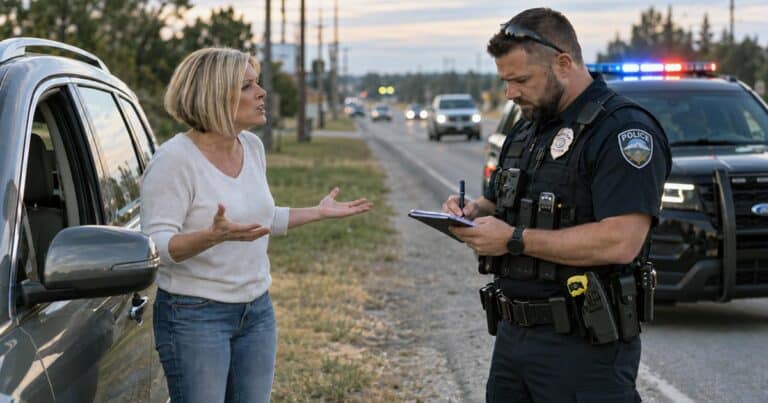
You don’t need to use police terminology or figure out what charge applies. I’d rather you explain what happened in your own words.
Start with what you know and work through the events as you remember them. The officer will ask questions to establish a timeline, identify people involved, and determine what information may need additional investigation.
Some questions may seem unusually specific. When did you last see the missing property? Who had access to it? Which direction did the vehicle leave? Does anybody nearby have cameras? We’re not expecting you to know which details will be useful. We’re trying to narrow down what happened and identify information we may be able to follow up on.
One of the biggest things I want people to understand is the difference between what they know and what they suspect. Let’s say you had a lawn mower sitting beside your shed when you went to bed. The next morning, it was gone. You might tell the officer:
I left my lawn mower beside the shed around 6:00 last night. When I went outside at 7:00 this morning, it was gone.
That’s information we can document. We know where the mower was last seen and have a time frame to work with. Now suppose you tell the officer your neighbor stole it. Maybe he did, but unless you saw him take it or have other information connecting him to the theft, that’s a suspicion.
I still want to hear it. If you suspect your neighbor because you saw his truck near the shed, had a disagreement with him, or heard something from another person, tell us that too. Those details may give us something to investigate. But don’t turn a suspicion into something you claim to have witnessed. There’s nothing wrong with saying you don’t know who took the mower.
The same goes for times, descriptions, and other details. If you remember only part of a license plate, give us the part you remember. If you think something happened around 8:00 but aren’t sure, say approximately 8:00. An accurate piece of incomplete information is more useful than a guess presented as fact.
What happens after you file a police report?
A police report documents the incident and the information available at that time. Depending on the circumstances, it may include your statement, witness information, the officer’s observations, descriptions of property, photographs, and other evidence. It doesn’t mean everything reported has been independently verified, and it doesn’t automatically mean somebody will be arrested.
Some incidents give officers several leads to pursue immediately. If someone steals a package from your porch and you have clear video showing the person, vehicle, and license plate, there’s information to work with. If the package disappeared sometime during a twelve-hour period with no cameras or witnesses, the investigation starts with considerably less.
Both incidents can be reported, but the information available may affect what investigators can do next. Depending on the department and the circumstances, a report may be reviewed, assigned for further investigation, updated with new information, or connected to other incidents. In some cases, there may not be enough evidence to identify a suspect or establish grounds for an arrestTaking a person into legal custody based on probable cause, a warrant, or another lawful authority..
I understand how frustrating that can be when you’re the person whose property was stolen or damaged. But making a report and having enough evidence to arrest somebody are two different things. A report creates a record that officers can return to if additional information becomes available.
What if you find more information later?
You don’t have to remember everything while the officer is taking the original report. Maybe you find the serial number for something that was stolen. A neighbor discovers camera footage. Your bank provides additional records, or you realize another item is missing. Keep the case or report number you’re given, if one is provided, and contact the department with the new information.
Try to provide information that helps officers identify the original incident so it can be added to the existing record or handled appropriately. If something new involves an immediate threat or emergency, call 911 instead of waiting to update the report.
You don’t need to investigate the case yourself before calling, and I certainly wouldn’t recommend confronting somebody you suspect just to get more information. Tell us what happened, explain what you know and what you suspect, and preserve whatever information you already have.
We’ll take it from there.