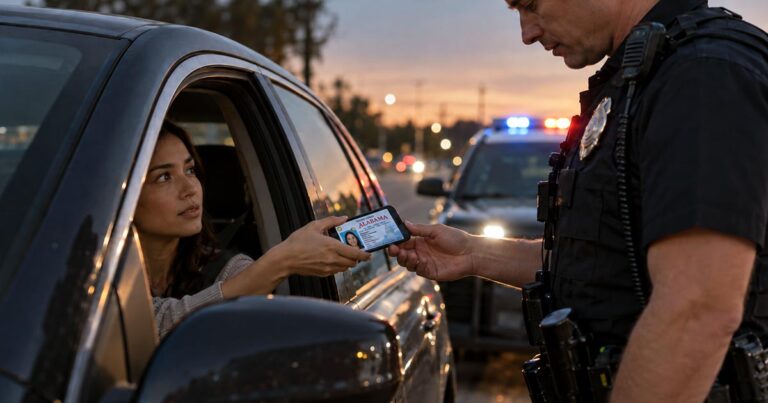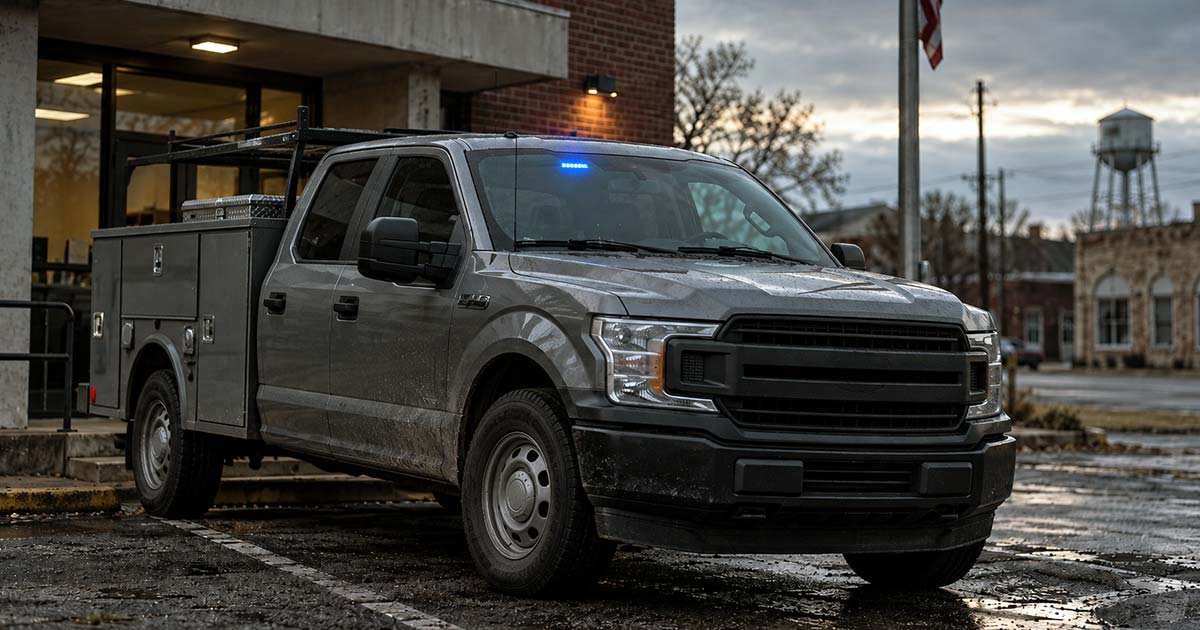
Back in July 2026, I posted a video explaining that an Alabama police chief has the authority to make any vehicle an emergency vehicle. I didn’t expect that statement to be particularly controversial, but I quickly discovered just how many people on Facebook apparently know more about Alabama law than the people responsible for enforcing it.
It was one of my first videos, and I hadn’t fully appreciated the number of people willing to confidently correct somebody without first checking whether they were right.
Some of the information being offered as fact was simply wrong. The interesting part is that the law isn’t particularly difficult to find.
Alabama Code § 32-1-1.1 (3) defines an authorized emergency vehicle to include publicly owned police vehicles, fire department vehicles, and ambulances. But it doesn’t stop there. It also includes other publicly or privately owned vehicles designated by the director of the Alabama Law Enforcement Agency or the chief of police of an incorporated city.
Subscribe to Field Notes
The stories and ideas I don’t want you to miss.
Notice what’s missing from that definition. It doesn’t say the vehicle has to look like a police car, belong to the municipality, or even be a type of vehicle normally associated with emergency services.
Consider a dump truck.
Some law enforcement agencies have used dump trucks and other nondescript vehicles equipped with radar equipment for traffic enforcement. A dump truck would make a terrible vehicle for actually pulling somebody over, and I can’t imagine it being particularly practical for pursuing a fleeing suspect. But that’s a question of practicality, not the type of vehicle described in Alabama’s statutory definition.
Under the law, a municipal police chief can designate a vehicle outside the traditional emergency vehicle categories. That could include a dump truck, provided the designation and its intended use comply with other legal requirements.
Just because the law allows a police chief to designate a privately owned vehicle as an emergency vehicle doesn’t mean it’s a good idea. As a matter of practice and practicality, I’m not going to authorize rescue personnel to run emergency traffic in their personal vehicles. And if somebody decides to do it anyway in Louisville without the proper authorization or equipment, they can expect to receive a ticket, possibly several.
But law enforcement is a different situation. There are legitimate reasons for officers to use vehicles that don’t look anything like a marked Tahoe most people expect to see. Sometimes the entire purpose is to avoid drawing attention to the vehicle. That might be an ordinary pickup truck, a work vehicle, or even something as unusual as a dump truck equipped with radar. The vehicle may look out of place in a police fleet, but that doesn’t necessarily make its use unlawful.
The statute gives that designation authorityto the ALEA director and municipal police chiefs,but it doesn't give the same general authority to county sheriffs.
Alabama Code § 32-5A-7 governs the special traffic privileges available to drivers of authorized emergency vehicles. Those privileges apply under specified circumstances, including responding to emergency calls or pursuing actual or suspected law violators. They also come with restrictions involving warning signals and safe operation.
Section 32-5A-115 establishes additional requirements for emergency warning equipment. Simply receiving an emergency vehicle designation doesn't mean the driver can disregard traffic laws whenever he wants.
And that brings me back to the original video.
People can disagree with whether a particular vehicle should be designated as an emergency vehicle. I can think of plenty of vehicles that would be terrible choices,even if the law allows their designation. But there's a difference between questioning whether something is a good idea and telling people it can't legally be done.
What bothered me about the response wasn't that people challenged what I said. I have no problem with somebody questioning me, and if I'm wrong about something,I want to know. The problem is how confidently people will give legal advice based on something they've heard, something they've always believed,or something that sounds right to them.
That's especially concerning when the advice involves law enforcement. Somebody reads a Facebook comment telling them that an officer has no authority to do something, decides the commenter must know what they're talking about,and acts on that advice during an actual encounter with police.
Depending on the situation,following that advice could get somebody arrested,injured,or facing legal consequences that could have been avoided by checking the law.
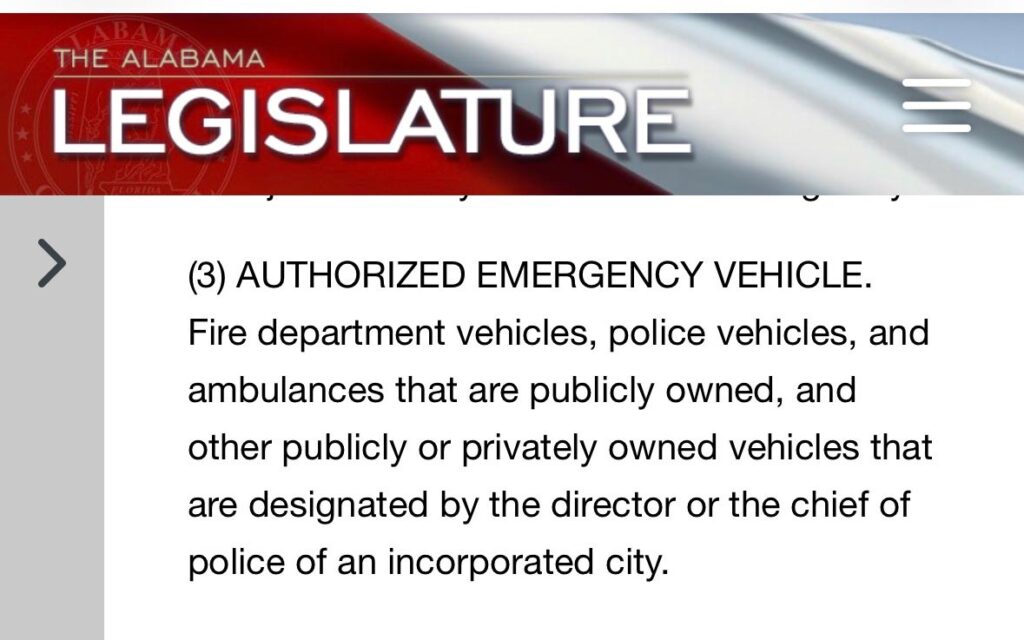
Alabama Legislature
The response to that video was part of what led me to start this website. A short video or Facebook post isn't always the best place to explain the details behind something I say. Sometimes the explanation requires a little more room, and I'd rather give people the law and my reasoning than argue with strangers in a comment section.
You don't have to take my word for anything I say. Read the laws, consider the circumstances, and make up your own mind. But if you're going to correct somebody about what Alabama law says,you should probably know what it actually says first.