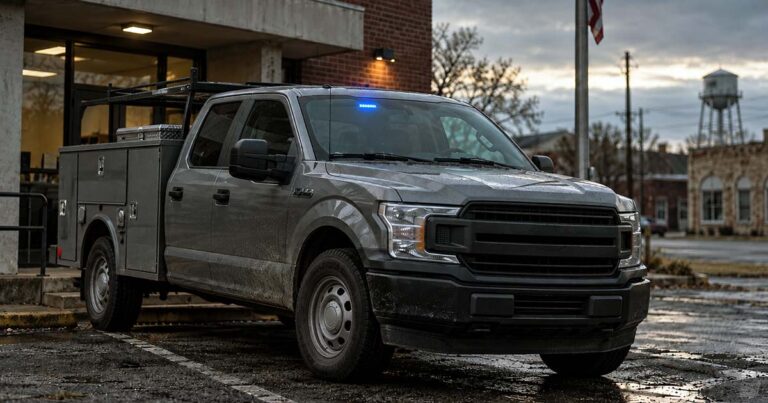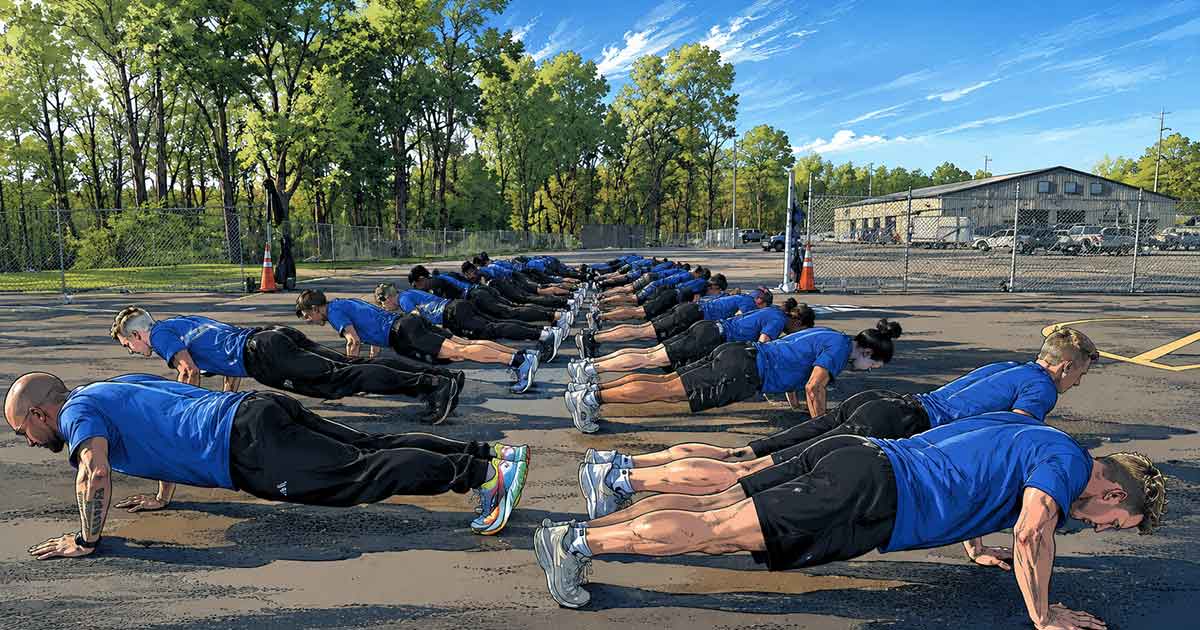
I went through the police academy for the first time in 1998. Twenty-eight years later, I went through it again. A lot changed in that time, including me, but one thing became even clearer the second time around:
The police academy is a terrible place to start getting ready for the police academy.
By the time you report on the first day, you’ve already gone through a hiring process. An agency has made a decision about you, evaluations and paperwork have been completed, money has been committed, and somebody has put their name behind sending you there.
If you’re the recruit, your life is also about to change for several months.
The academy isn’t supposed to be where you find out whether you can run, whether you know how to study, whether you can get somewhere on time, whether you can take correction, or whether you actually want to be a police officer. You’ll get better at some of those things while you’re there, but you don’t want to arrive on Day One trying to build everything from scratch.
Subscribe to Field Notes
The stories and ideas I don’t want you to miss.
You have to get hired first
One thing that surprises some people is that you generally can’t decide one morning that you want to attend an Alabama police academy and sign yourself up. An agency has to hire and sponsor you. That means the decision starts before the academy does. A police chief, sheriff, or another hiring authority has already decided they’re willing to hire you, put the department behind you, and send you to become a police officer.
APOSTC’s current academy application checklist includes the state requirements involving education, background information, physical and psychological evaluations, fingerprints, and other certification paperwork. Depending on your education, Basic Ability Test or ACT WorkKeys results may also be required. Meeting the requirements makes you eligible. It doesn’t require a department to hire you.
When I’m deciding whether to send somebody, I’m asking whether I have enough reason to believe that investing in this person has a reasonable chance of ending with a good police officer coming back. A state minimum can’t answer that for me.
Make sure you actually want the job
Something I’ve noticed during hiring is that some applicants are much more certain they want out of the job they already have than they are that they want to become police officers. I understand that. People get frustrated with work. They’re bored, underpaid, burned out, tired of management, or ready for something different.
Law enforcement can start looking like the next option.
That doesn’t automatically make somebody a bad applicant, but police work is a bad place to run from another career. The schedule can be terrible. People will lie to you, argue with you, insult you, call you at inconvenient times, and expect you to fix problems that may not have a good solution. Some days are boring. Other days will make you wish they were.
I don’t need somebody to tell me they’ve dreamed of being a cop since they were five years old. I’d rather hear an imperfect but honest answer about why the job interests them than a polished answer they found online because they think that’s what I’m supposed to hear.
Before you spend months of your life going through an academy, know whether you’re moving toward this job or just trying to get away from another one.
Meeting the minimum doesn’t mean you’re ready
There are requirements you simply have to meet. Alabama sets some of them. The academy sets some. The department hiring you may set others.
Alabama’s basic academy curriculum is currently 560 hours and is scheduled over fourteen weeks. You’re going to deal with academics, firearms, defensive tactics, driving, physical training, attendance requirements, examinations, practical skills, and a lot of information in a fairly short period of time.
Passing the minimum standard is necessary. Building your entire preparation around barely passing it is another thing. That is especially true physically. If you have to run a certain time, you don’t want the best run of your life to be exactly that time. If you have to complete a certain number of repetitions, you don’t want the last one to depend on being completely rested, having perfect weather, and feeling better than you normally do.
You’ll have bad days. You may sleep poorly. You’ll be sore. It may be hot. You may have already spent hours doing something else before you’re tested. You want some room between what you can do and what you have to do.
Louisville currently requires candidates entering our Pre-Academy Trainee Program to complete thirty push-ups in one minute, thirty sit-ups in one minute, our physical agility course, and a two-mile run in 20 minutes and 37 seconds or less. Those are our entry standards for that program, not the statewide APOSTC standard.
Getting there doesn’t mean we’re finished. I want somebody physically prepared enough that the academy’s fitness requirements aren’t taking all of their attention away from everything else they’re supposed to learn.
The academy isn’t a fourteen-week workout program
Fitness gets a lot of attention because it’s easy to measure. You can time a run, count push-ups, and watch numbers improve. But a fourteen-week academy is not a fourteen-week fitness program, and it’s not a fourteen-week vacation either.
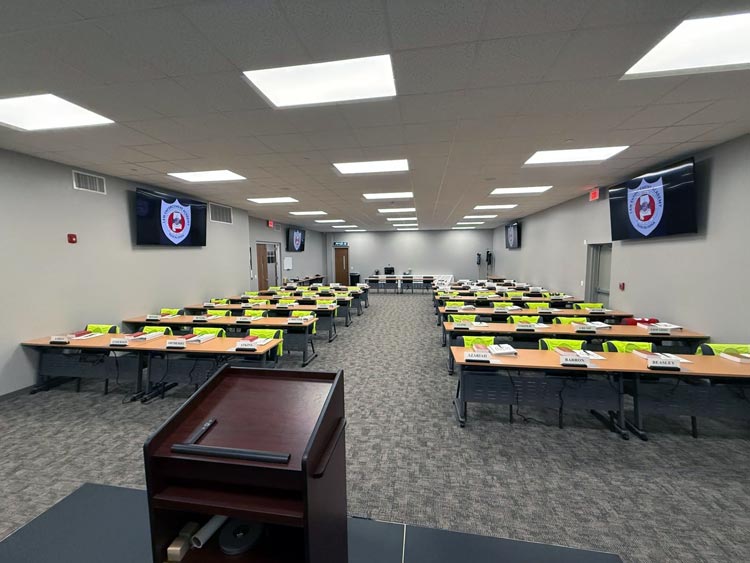
When I went back through the academy, I spent plenty of time in classrooms. There was material to learn, tests to pass, equipment to keep up with, instructions to follow, firearms qualification, driving, defensive tactics, and a schedule that didn’t particularly care what else was happening in my life.
You can be in excellent physical condition and still have trouble if you can’t follow instructions, keep track of your equipment, show up on time, learn the material, work with other people, or accept correction without turning it into an argument.
Learn how to show up
This may be the least exciting academy advice I can give, but learn how to show up. Be where you said you’d be. Be early enough that you’re ready when things start. Bring what you were told to bring. If somebody gives you something to complete, complete it. Those are small things until somebody else is depending on you.
If I have to keep reminding somebody to arrive on time while the consequences are small, I’m going to wonder what happens when another officer has been at work for twelve hours waiting on them to relieve the shift. If somebody constantly forgets equipment during training, I’m going to wonder what happens when the equipment actually affects their ability to do the job.
That’s one reason I pay attention to candidates before the workout even starts. I’m watching when they arrive, whether they’re prepared, how they interact with people, what happens when plans change, and whether I’m having to repeat the same correction every few days. An interview only gives me a snapshot that I rarely even put much weight on.
Learn how to take correction
You are going to be corrected at the academy. You’re going to misunderstand something, perform a skill incorrectly, forget something, or be told to do something differently when you thought what you were doing was fine. That’s training. What I want to see is what happens after the correction.
The approach we use with candidates is simple: listen, acknowledge it, correct it, and move on. That doesn’t mean you can’t ask a question. If you genuinely don’t understand what somebody wants, ask. There’s a difference between asking for clarification and turning every correction into an argument about why you weren’t technically wrong. If somebody tells you, “Next time, do it this way,” sometimes the correct response really is, “Got it,” followed by doing it differently the next time.
Police officers train throughout their careers. Graduating from an academy doesn’t end that. If somebody can’t accept correction before they’ve earned the badge, I don’t have much reason to believe putting one on their chest will make them easier to teach.
Command presence isn’t acting tough
Candidates hear the phrase command presence and sometimes misunderstand what it means. Police officers do need to be able to function around angry, intoxicated, frightened, aggressive, or uncooperative people. There will be times when somebody is deliberately testing whether you mean what you say. That doesn’t mean you need to yell, act arrogant, pretend you’re fearless, or treat people badly so nobody mistakes you for being weak.
I’m looking for whether you can control yourself, communicate clearly, give directions when necessary, and continue functioning when somebody pushes back. I don’t expect somebody who’s never been a police officer to walk into an interview with the same confidence as somebody who’s been doing the job for ten years. I do expect them to show up for an interview, on time and not wearing a wife-beater or Crocs, and I do need enough there that I have something to develop.
In our candidate program, we sometimes make people communicate while they’re tired, under time pressure, or immediately after physical activity. I’m not looking for police trivia. I’m watching whether they can listen, think, organize what they’re trying to say, and get the words out while they’re uncomfortable. Being quiet or nervous doesn’t automatically bother me. Refusing to work on something after it’s been identified does.
Get your life ready too
Some of the most useful academy preparation has nothing to do with police work. Handle as much ordinary life as you reasonably can before you leave. Set up bills. Deal with appointments you’ve been putting off. Figure out childcare. Make sure your transportation is dependable. Talk to your family about what the next several months may actually look like.
Your life doesn’t stop while you’re in training. You just have less time and energy to deal with it. Your family may carry some of that burden too. You may be gone more often or tired when you’re home. Depending on where you live and which academy you’re attending, you may spend a lot of time away. Everybody involved should understand that before Day One rather than figuring it out halfway through.
Learn how to study again
Don’t overlook the academic side. Some recruits arrive shortly after high school or college and are still accustomed to sitting in a classroom, taking notes, studying, and taking tests. Others haven’t seriously studied anything in ten or twenty years.
If that’s you, I wouldn’t wait until the academy to find out whether you remember how. I also wouldn’t try to teach yourself police law from whatever you find online. You can learn bad information just as easily as good information, and then somebody has to help you unlearn it.
Practice learning instead. Read something and explain it afterward without looking at it. Take notes. Try flashcards or written summaries. Review material more than once. Get used to sitting down and concentrating when there are other things you’d rather be doing.
Know the difference between being sore and being injured
You’re probably going to hurt at some point. Your legs may be tired, you’ll get sore, and there will probably be mornings when getting out of the car isn’t especially pleasant.
That isn’t necessarily the same thing as being injured.
People get this wrong in both directions. Some stop whenever something becomes uncomfortable. Others think toughness means ignoring every warning sign until something manageable becomes a real injury.
I know the second one pretty well. I went through the academy with a torn LCL and meniscus. I finished, but I wouldn’t recommend the experience to anybody. Running, squatting, climbing stairs, getting up from the ground, and doing ordinary training while injured turned fourteen weeks into something much harder than it needed to be.
Discomfort and fatigue are part of training. Injuries, illness, overheating, dizziness, weakness, or something else affecting your ability to participate safely need to be reported. The objective is to graduate able to do the job afterward, not prove how much damage you can tolerate along the way.
What I look for before I send somebody
For a small department, sending somebody to the academy is a significant investment. Once I hire someone, the city starts investing in that person before they can independently work as an officer.
At Louisville, we estimate that sponsoring a new officer through the process can represent roughly $25,000 by the time pay, benefits, training expenses, equipment, evaluations, academy costs, and other expenses are included. It also takes time from other officers and supervisors who train them, review their work, correct mistakes, work out with them, and eventually help teach them the job in the field.
That’s one reason “technically eligible” isn’t enough for me. I’m trying to decide whether someone is ready enough that the investment has a reasonable chance of ending with a good officer coming back.
I also know that sometimes the answer isn’t no. It’s not yet.
That’s part of why I developed Louisville’s Candidate Development Program. It gives me more time with somebody who may have potential but isn’t ready for me to hire yet. We work on fitness, but I’m also watching whether they show up, take correction, communicate, help other people, improve, and keep their commitments.
An interview may give me forty-five minutes with somebody who is trying to make the best impression possible. Working with them repeatedly gives me time. I see what happens when they’re tired, when they have a bad day, when I correct them, and when whatever motivation brought them through the door has had a chance to wear off.
They get to evaluate us too. They learn what I expect, how we train, how we communicate, and whether becoming a police officer still looks like something they want once they’ve seen more of the work behind it. The program is an opportunity for somebody who isn’t ready yet to show me whether they’re becoming ready.
If I were preparing today
If I knew I had several months before the academy, I’d use them. I’d get in shape first. I’d run enough that running stopped being an event I had to mentally prepare for. I’d work on strength, endurance, recovery, and being able to perform when I wasn’t perfectly rested. I’d get ahead of the minimum instead of chasing it.
I’d pay attention to the boring stuff too. Can I get up when the alarm goes off? Can I get somewhere early every day? Can I remember what somebody told me to bring? Can I keep track of my equipment and instructions without somebody managing me?
I’d pay attention to how I react when somebody tells me I’m wrong. If my first instinct is always to explain myself, defend myself, or make sure everybody understands why it wasn’t really my fault, I’d work on that before an academy instructor has to.
If I’d been out of school for a while, I’d start studying again. Not police material. I’d practice reading, taking notes, retaining information, and concentrating.
I’d get my life as organized as I reasonably could, and I’d make sure I actually wanted the job. Not just the uniform, the idea of the job, or an escape from whatever I was doing before.
Before you report
If somebody asked me for a simple pre-academy checklist, this is about where I’d start:
- I can exceed the physical standards I’m expected to meet.
- I’ve trained consistently, not only when I felt motivated.
- Running and physical training are normal parts of my week.
- I know how I perform when I’m tired.
- I can show up early without somebody chasing me down.
- I can keep track of my equipment and instructions.
- I can accept correction and apply it.
- I know how I study and retain information.
- I’ve handled as many predictable problems at home as I reasonably can.
- My transportation is dependable.
- My family understands what the next several months may look like.
- I’m dealing honestly with any injury or medical problem.
- I understand what my sponsoring agency expects from me.
- I know why I want to become a police officer.
- I understand that graduating from the academy means I’m ready to start learning the job, not that I’ve finished learning it.
You don’t need to show up perfect. If I waited for perfect applicants, I’d never hire anybody. You do need to arrive ready enough that the academy can spend its time teaching you the things you couldn’t have handled before you got there.
Going through it again after twenty-eight years reminded me how much hits a recruit at once. Anything you can take care of before Day One gives you more room for the things you can’t prepare for until you’re there.