When I’m trying to decide whether somebody is coachable, I don’t put much weight on whether they nod, agree with me, or thank me for the feedback. I’ve seen people handle a correction perfectly in the moment and then do the exact same wrong thing on the next call.
Coachability shows up after the conversation. Did anything change?
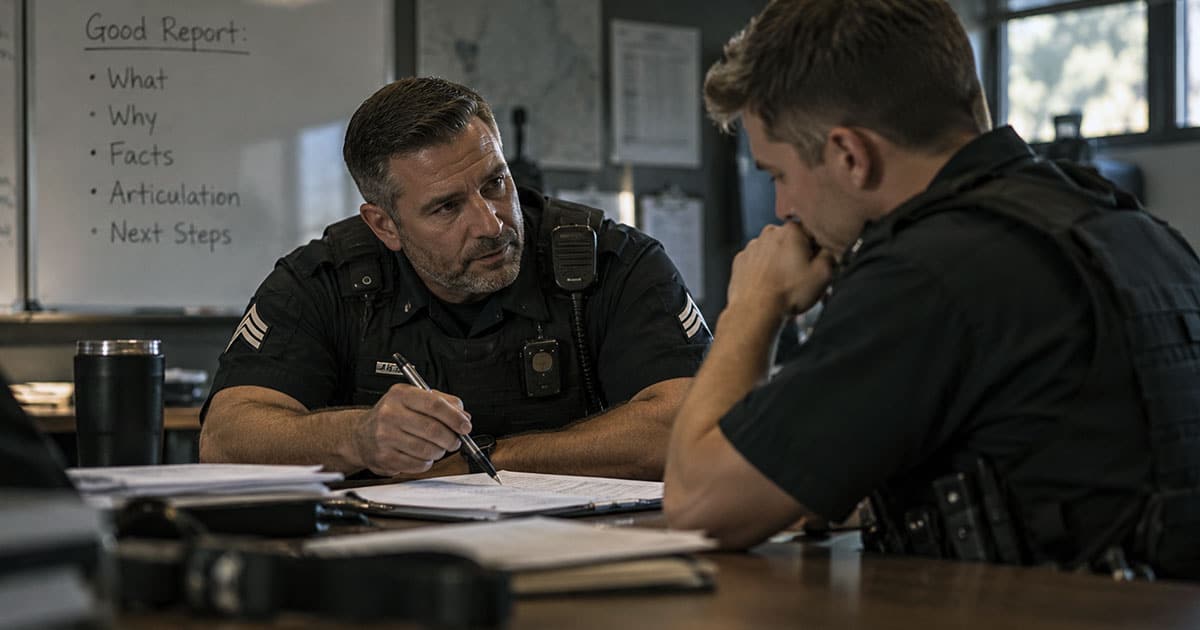
Say I tell an officer his reports leave out why he made the stop. He listens, says he understands, maybe even thanks me. If the next report has the same hole, the conversation didn’t accomplish anything, no matter how respectful it was. If the report is fixed, I don’t need a speech about how seriously he takes the job.
The same goes for the officer who communicates more clearly on the next call, slows down before a decision, or corrects the safety issue that was pointed out. Clear expectations are my responsibility, so what I’m watching afterward is whether the performance changed.
Subscribe to Field Notes
The stories and ideas I don’t want you to miss.
Feedback doesn’t always arrive the way I’d prefer, either. The timing may be bad, the person may explain it poorly, or I may disagree with part of it. I still want the useful part, and that’s what I look for in an officer. I need the next report, the next call, the next training session, or the next decision to show me the conversation went somewhere.
That doesn’t mean I want people who agree with everything a supervisor says. I need officers who can think for themselves and speak up when an instruction creates a legal, ethical, or safety problem. I’d rather have somebody ask why than pretend to agree and ignore it later.
What I watch is where the disagreement starts. An uncoachable person assumes the other person must be wrong, and every correction becomes an argument about the supervisor or a reason the standard shouldn’t apply. A coachable person at least asks what they might be missing before rejecting it.
I look at applicants the same way. If I tell somebody, before they’re hired or before they arrive at the police academy, that their fitness, communication, judgment, or preparation isn’t where it needs to be, I care less about whether they agree with me that day than whether they come back having worked on the gap.
I’ve had applicants sit in my office during an interview and tell me they could do whatever was needed to meet the academy standards. When I had doubts, I’d take them to the gym and let them show me as a condition of hire. In 2026, four out of five didn’t make it to day two. The fifth made it to day two, then quit halfway through. And those were just the ones who showed up.
I’m not looking for Superman or Wonder Woman. I’m looking for somebody who still wants the job on day three as much as they said they wanted it when the room was comfortable and the job was still theoretical.
By then, I’m not listening to what they say they want. I’m watching what they’re willing to do for it.