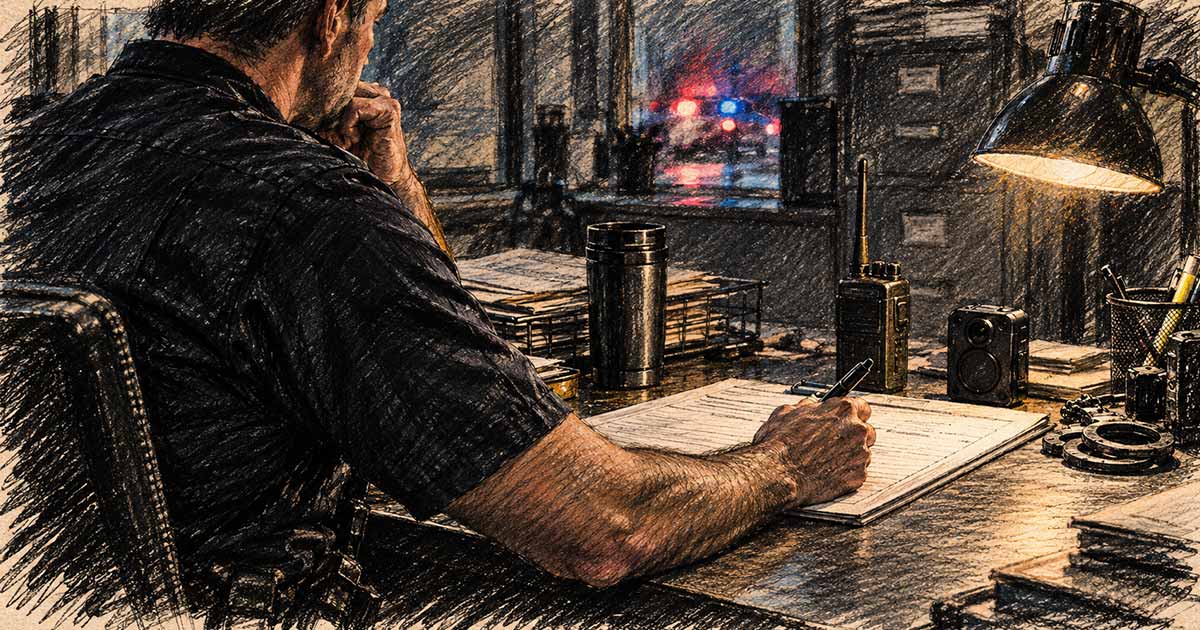
I’ve had officers ask me why they need to write a use-of-force report when everybody already knows the force was justified. Nobody complained. Nobody got hurt. Maybe it was nothing more than a two-second grab to get somebody under control. Why write several paragraphs about it?
Because six months from now, “everybody knows what happened” isn’t going to help me much. If the incident is reportable under the department’s policy, I want it documented. Different departments draw that line in different places, and I’m not pretending there’s one universal threshold. But once we’ve crossed whatever line our policy sets, the officer doesn’t get to decide afterward that it was too minor to bother writing down.
The reports that don’t help me usually read about the same way:
- Subject resisted.
- Force was applied.
- Force worked.
That’s not much of a report.
Subscribe to Field Notes
The stories and ideas I don’t want you to miss.
I already know how the story ended. I need to know how we got there. What did the officer walk into? What did he know? What was the person doing? What changed? Why did the officer decide force was necessary? What force did he use, and when did he stop?
I’m not looking for ten pages because ten pages must be better than two. I want enough to understand the decision the officer actually made.
The same goes for body-camera video, and “see attached video” isn’t a report either. The camera can show me what was in front of it. It can’t always tell me what the officer heard over the radio before getting there, what information he already had, what he saw outside the frame, or why something mattered to him in the moment. I want the video, and I want the officer’s account. They’re doing two different jobs.
Then somebody has to actually review the thing.
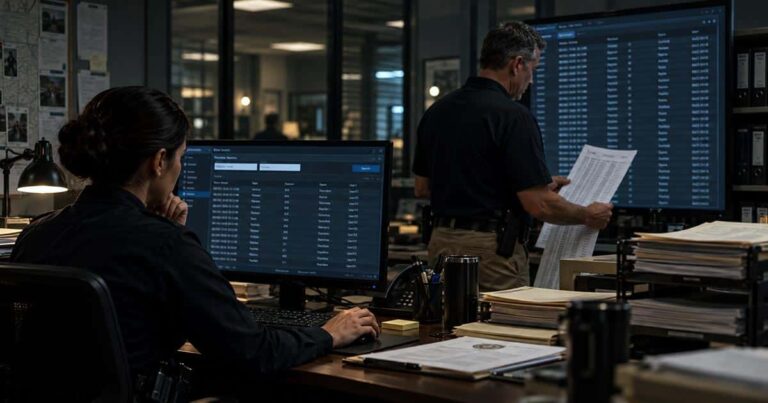
I’ve inherited files where the supervisor’s contribution was basically a signature at the bottom. If I’m reviewing a force report, I want to know whether the report matches the other evidenceInformation or an item that may help prove or disprove a fact in an investigation or court case., whether the force appears consistent with policy, whether there’s something we need to address, and whether I’ve seen the same issue before.
If the camera wasn’t on when it should’ve been, I want to know that too. Forgetting to turn it on is one problem. Knowing it should’ve been on and then pretending otherwise tells me something different.
Sometimes the answer is that the officer did exactly what he should’ve done. Good. That’s one of the reasons I want the report in the first place. Good documentation isn’t just there to catch somebody doing something wrong. It gives me something to point to when the officer did it right and somebody questions it later.
What worries me more is the force that never made it into the file at all. I can’t review it, defend it, learn from it, or recognize it as part of a pattern because, as far as the department’s records are concerned, it didn’t happen.
A bad decision usually gets attention because somebody is already looking at it. But if an officer knew it should’ve been reported and deliberately left it out, now I’ve got another problem that may be worse than whatever happened during the original call.
Accountability starts with clear expectations. Tell officers what has to be reported, expect them to document it honestly, and make sure the supervisor’s review means more than putting a name at the bottom.
A reportable use of forcePhysical control, weapons, or other force used by an officer to accomplish a lawful objective. The force must be reasonable under the circumstances known to the officer at the time. can turn out to be completely justified. That’s fine.
I still want the report.