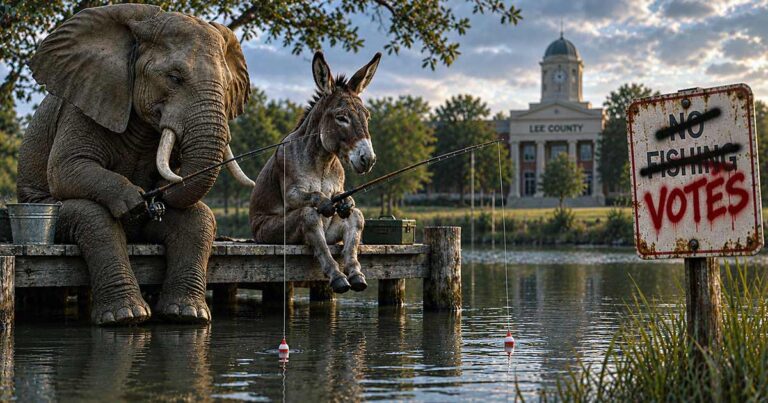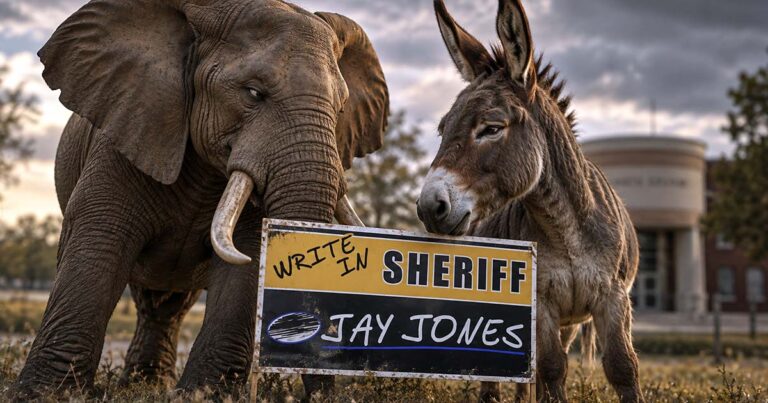
Jay Jones has served as sheriff of Lee County since January 1999, following his election in 1998. Nearly three decades in office gives him a substantial record to campaign on, along with relationships and experience that a challenger can’t easily match.
But it also gives voters nearly three decades of decisions to examine, and former deputy Cam Hunt has found several that could work against Jones in the Republican primary.
Lee County has a strong Republican voting history, and no Democrat entered the sheriff’s race. That makes the Republican primary especially important, because the decision voters make tomorrow could determine who leads the sheriff’s office for the next four years.
For Jones, the challenge isn’t simply holding off another Republican candidate. It’s defending his record before voters who may agree with him on some issues but disagree strongly on others.
Subscribe to Field Notes
The stories and ideas I don’t want you to miss.
The most personal controversy involves Hunt himself. After Hunt told Jones that he intended to run against him, Jones terminated his employment with the sheriff’s office. At an April candidate forum, Hunt argued that seeking elected office shouldn’t have cost him his job. Jones defended the decision as necessary to maintain unity within the department and said Hunt had been offered an opportunity to resign.
I can understand why a sheriff would have concerns about keeping a deputy who is actively campaigning to replace him. That relationship depends on trust, and Alabama law gives sheriffs considerable authority over their deputies. But having the authority to make a personnel decision doesn’t mean voters will agree with how that authority was exercised.
Some may believe Jones was protecting the department from an internal conflict. Others may see a deputy losing his job because he challenged an elected official. Personally, I don’t think that was the only reason Hunt was fired, but Jones doesn’t seem interested in bringing to light the other reasons. A clean race only works when both candidates participate.
Unlike the policy disagreements in this race, the firing doesn’t require voters to understand a particular law or federal program before forming an opinion. People understand employment, loyalty, and the consequences of losing a job. They may reach very different conclusions about what happened, but the issue is easy to relate to.
Jones has also faced criticism over his relationships with established political figures in Lee County. For a sheriff who has been in office since 1999, those relationships are part of the record voters will also consider. Some people may see them as evidence of experience and an ability to work with county leadership. Others may question whether those relationships have become too close.
Working with county officials is part of running a sheriff’s office, but after nearly three decades, voters aren’t evaluating Jones solely on how he operates the department today. They’re also looking at the decisions he’s made, the people he’s worked with, and whether they still want the same leadership.
Constitutional carry presents a different problem for Jones. He opposed Alabama’s move toward permitless carry, which took effect in 2023, and has defended that position on public safety grounds. His argument is that the previous permitting system provided law enforcement with a useful tool. Gun rights organizations disagree, and both BamaCarry and the National Association for Gun Rights PAC endorsed Hunt in February, citing Jones’s opposition to constitutional carry.
A sheriff has every reason to speak up when legislation affects how his department operates. But once a sheriff takes a public position, he also has to accept that voters may judge him by it. Constitutional carry is a significant issue among Alabama Republicans, and Hunt now has a clear policy disagreement to campaign on, with organized support behind him.
Immigration enforcement has created another disagreement, although the candidates aren’t arguing over whether the sheriff’s office should cooperate with federal immigration authorities. Hunt has criticized Jones for not participating in the federal 287(g) program, which allows participating local agencies to perform certain immigration enforcement functions under federal supervision.
Jones maintains that his department already cooperates with Immigration and Customs Enforcement by notifying federal authorities about people in custody, honoring lawful detainers, and assisting with transfers. He has also raised concerns about the administrative demands and potential liability associated with formal participation in 287(g).
Those are different approaches to immigration enforcement. Not participating in 287(g) doesn’t mean refusing to cooperate with ICE, and Jones has rejected that characterization. But Hunt can still argue that the department should be doing more. For voters who want a stronger local role in federal immigration enforcement, that disagreement may be enough to influence their decision.
The immigration issue became more contentious after a deputy was wounded in April while officers were attempting to serve a warrant. Hunt connected the incident to his criticism of the department’s immigration enforcement approach, while Jones accused Hunt of using the shooting for political purposes. The disagreement brought an already controversial campaign issue into a much more personal setting.
None of these issues has to persuade every voter. Someone may support Jones’s handling of the department but disagree with him on constitutional carry. Another may agree with his immigration position but question the decision to fire Hunt. Others may simply believe that after nearly thirty years, it’s time for someone else to lead the sheriff’s office.
That’s the challenge for a longtime incumbent. His experience may be his greatest advantage, but he also has to defend decisions made over many years, sometimes to voters who disagree with him for entirely different reasons.
Hunt doesn’t necessarily need one issue that turns the entire electorate against Jones. He needs enough voters, for whatever combination of reasons, to decide they’re ready for a change.