If Jay Jones wins the November election through a write-in campaign, Cam Hunt wouldn’t necessarily have to accept the result without question. Alabama law provides a process for contesting elections. But a successful challenge would require more than pointing to something questionable about the campaign.
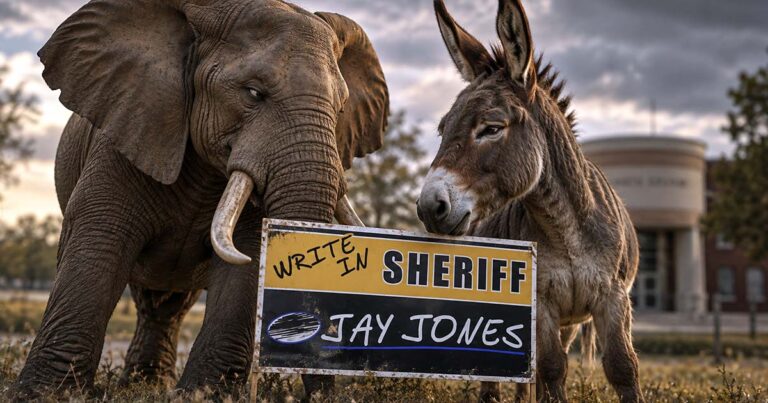
That possibility raises an interesting question in Lee County, where the financing behind Jones’s write-in campaign remains unclear. His original campaign committee filed for dissolution in June, and Jones maintains that he’s not involved in the write-in effort. Meanwhile, signs promoting his return to office have been distributed without any apparent identification of who’s paying for them.
Whether those circumstances amount to a campaign-finance violation is one question. Whether such a violation could affect the outcome of an election is another.
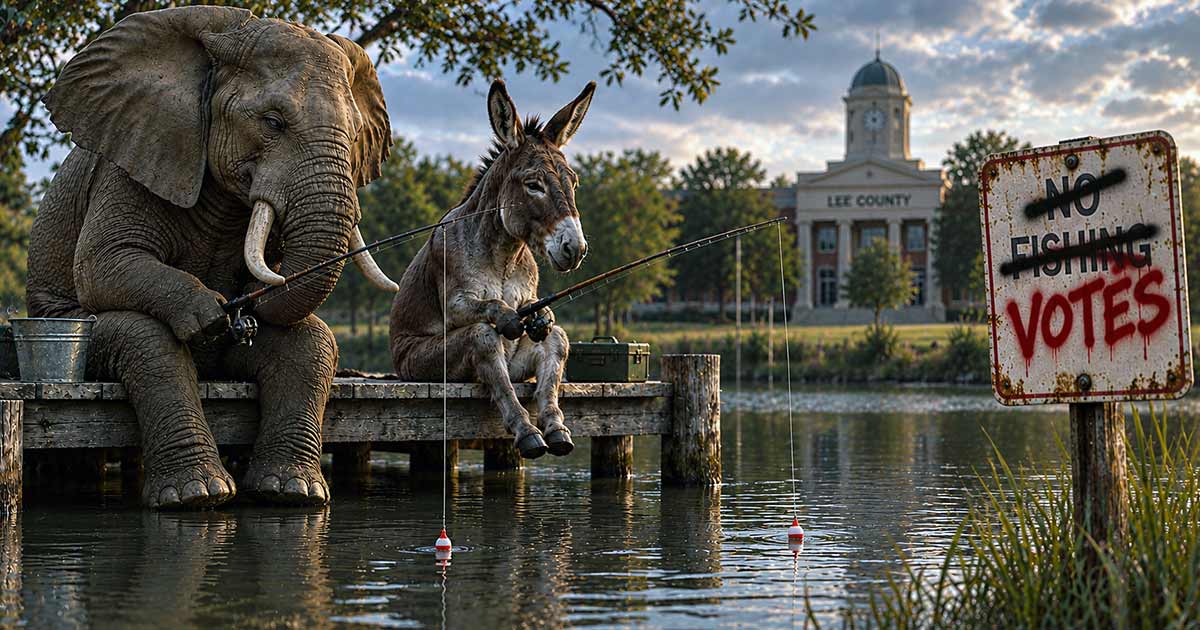
But let’s say investigators eventually determine that somebody violated a campaign-finance reporting requirement or failed to identify who paid for political advertising. That could result in enforcement action against the responsible person or organization. It doesn’t automatically mean the votes cast for Jones become invalid. Campaign-finance enforcement and an election contest are different legal processes.
Subscribe to Field Notes
The stories and ideas I don’t want you to miss.
Under Alabama Code § 17-16-40, a qualified voter may contest a county election on specified grounds, including ineligibility, illegal votes, rejected legal votes, certain misconduct, or a recount identifying a different winner. Section 17-16-41 limits when misconduct or disputed votes justify setting an election aside. The question isn’t simply whether someone broke a rule. It’s whether the evidence satisfies the legal requirements for changing the result.
The write-in ballots themselves could also become an issue. Under § 17-6-28, a valid write-in vote requires the voter to write the name and mark the designated space. The law addresses when write-in votes are individually counted, objections to counting determinations, and a separate procedure for requesting a count by 5 p.m. on the first Friday after the election, with security for its cost. A dispute over counting those ballots is different from a complaint about who financed the signs encouraging voters to cast them.
Timing is another consideration. Under Alabama Code § 17-16-49, an election contest generally must begin within 20 days after the result is declared. For a sheriff’s election, § 17-16-56 requires a verified statement filed with the county circuit court clerk and security for costs. A recount request has a different deadline, ending 48 hours after the official county canvass. A candidate can’t assume a campaign-finance investigation will finish before those deadlines expire.
If Jones wins, Hunt may have legal options. Whether any of those options could change the result would depend on evidence of a legally sufficient violation, not merely the existence of allegations.
There’s an irony here that I can’t overlook.
Jones was reelected to represent Lee County, Place No. 2, on the Alabama Republican State Executive Committee in the same primary in which he lost the sheriff’s nomination.
Jones fired Hunt for challenging him while serving as his deputy, arguing that loyalty to the organization and its leadership mattered. Yet Jones hasn’t publicly disavowed a write-in effort to defeat the candidate his own party nominated.
You can’t demand loyalty from people working under you and then treat that same obligation as optional when you’re the one who doesn’t get the outcome you wanted.