There’s something unusual about the effort to return Jay Jones to the Lee County sheriff’s office. A Republican sheriff who lost his own party’s primary is now receiving support from people who don’t necessarily agree with his politics, or even with each other.
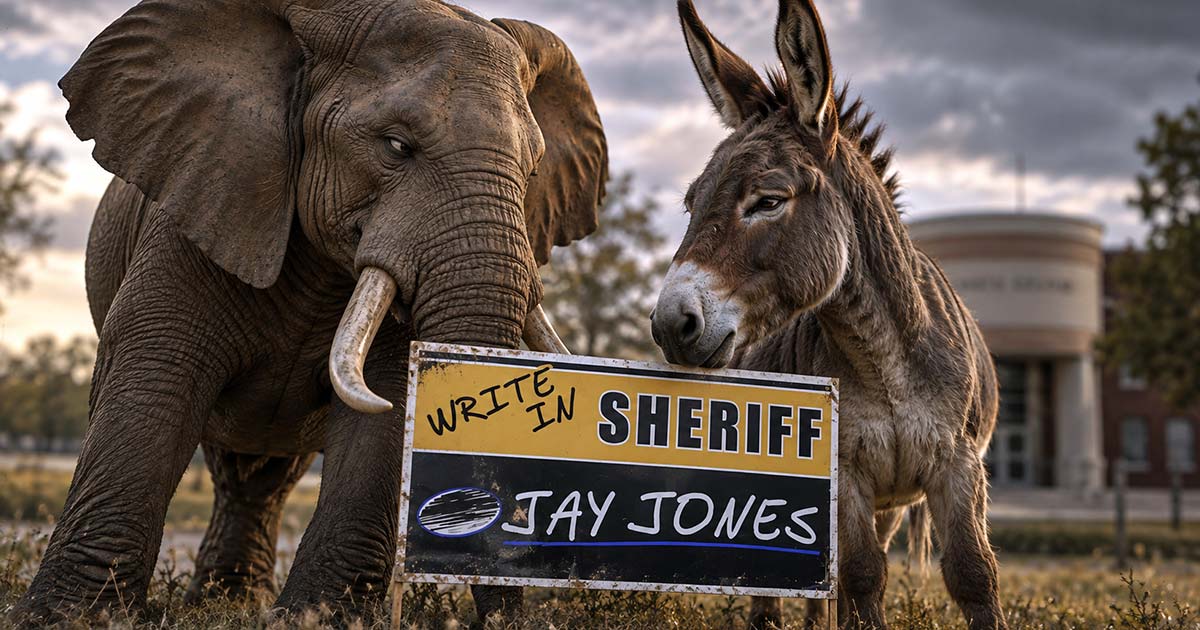
Jones lost the May Republican primary to Cam Hunt by 307 votes. With no Democratic candidate running for sheriff in November, Hunt is the only candidate listed on the general election ballot. But a grassroots write-in effort is encouraging voters to return Jones to office instead.
Some of that support comes from people who simply want to keep the sheriff they’ve known for nearly three decades. Former Lee County deputy Jack Carter has publicly encouraged voters to write in Jones, arguing that the county has another opportunity to retain him.
Debra Beil, identified as one of the campaign’s organizers, told AL.com that she considers herself liberal, although not strictly a Democrat. She described support from people across party lines, including Democrats frustrated that they hadn’t participated in choosing the sheriff during the Republican primary.
Subscribe to Field Notes
The stories and ideas I don’t want you to miss.
I can understand their frustration, but I don’t find it particularly justified. This was a Republican primary, conducted to select the Republican nominee. Democrats had the opportunity to field their own candidate, and voters knew well before the election that the Republican nomination could effectively decide the race if nobody else qualified. That’s how partisan elections work.
The fact that one party doesn’t have a candidate doesn’t obligate the other party to accommodate voters who chose not to participate in its primary. Those voters still have every right to participate in November’s general election, including supporting a write-in candidate. But that’s different from suggesting they were somehow denied a voice in selecting the Republican nominee.
But there’s another reason some voters on the political left are encouraging support for Jones, and it has more to do with immigration enforcement than party loyalty.
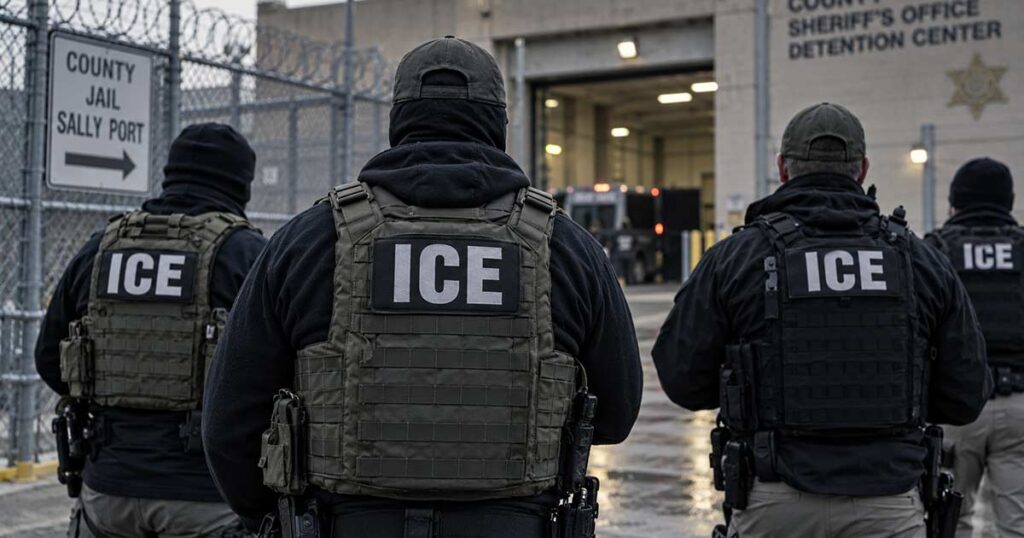
According to reporting by Blaze News, members of an Auburn-area Indivisible Facebook group began discussing a Jones write-in campaign immediately after the primary. Some expressed opposition to Hunt’s position on immigration enforcement, particularly his support for expanding the sheriff’s office’s role through the federal 287(g) program.
Immigration had already become a contentious issue during the primary. Hunt criticized Jones for declining to join 287(g), while Jones maintained that his department was already cooperating with Immigration and Customs Enforcement and questioned whether a formal agreement would provide enough additional benefit to justify the responsibilities.
Under the 287(g) program, participating local agencies can authorize trained officers to perform specified federal immigration functions under ICE supervision. That’s different from the ordinary cooperation a sheriff’s office can provide through arrests, detention, communication, and transfers involving federal authorities.
Jones’s office wasn’t refusing to work with ICE. In August, the Lee County Sheriff’s Office reported that it had assisted with transferring 271 individuals to ICE custody in 2025 and detained another 152 for transfer through July 2026.
Those figures demonstrate that cooperation was taking place. Whether joining 287(g) would have improved those results is another question. Hunt argued that the county needed a more active immigration-enforcement role. Jones argued that the existing arrangement allowed his department to cooperate without assuming additional federal responsibilities and potential liability.
The disagreement intensified after a Lee County deputy was shot while serving a first-degree rape warrant in April. Hunt connected the incident to his criticism of Jones’s immigration policy after receiving information that the suspect was in the country illegally, although authorities hadn’t confirmed that status at the time.
The deputies already had the authority to arrest the suspect on the criminal warrant, and the incident itself doesn’t establish that participation in 287(g) would have prevented the shooting.
What makes this particularly interesting is that Jones isn’t campaigning as an opponent of immigration enforcement. He’s a Republican sheriff whose department has documented cooperation with ICE. Yet his refusal to enter a formal 287(g) agreement has become a reason some people who oppose expanded immigration enforcement want to keep him in office.
Hunt has questioned Democratic involvement in the write-in effort, while acknowledging that voters have the right to support Jones. And Jones maintains that he isn’t organizing the campaign, although he’s said he would continue serving if elected.
That raises another question about the campaign itself. Who’s actually behind it, and who’s paying for it? In an October 21 interview with WTVM, a woman identified as a founder of the campaign discussed distributing approximately 1,000 stickers and hundreds of yard signs. The station didn’t publicly identify her, although other organizers and supporters have been named in separate reporting.
Somebody is paying for those materials.
I searched Alabama’s campaign-finance reporting system and found that Jones’s original campaign committee filed a statement of dissolution effective June 22, 2026. The filing indicates that a termination report was attached, but I couldn’t locate that report among the available downloads. I also couldn’t identify a separate committee associated with the write-in effort.
The advertising raises its own concerns. The write-in yard signs I’ve seen show no apparent identification of who paid for them. Under Alabama Code §17-5-12, covered political advertising must identify the person or organization directly responsible for payment, regardless of whether the candidate authorized the advertisement.
Knowing who’s organizing a campaign isn’t necessarily the same as knowing who’s financing it. The materials could be paid for by individual supporters, an independent political organization, or an existing political committee. Without identifying the source of the funding, I can’t establish which arrangement applies.
And even if Jones has no involvement in the effort, that doesn’t eliminate the obligations of whoever is financing its advertising. With hundreds of signs being distributed, no apparent identification of who’s paying for them, and no associated campaign-finance filing I’ve been able to locate, I think the Alabama Ethics Commission should investigate. It should establish who’s financing the effort and determine whether any campaign-finance violations have occurred.
The write-in campaign has also created tension within the Republican Party itself.
In an October 26 public statement, Jones alleged that the chairman of the Alabama Republican Party told him he needed to publicly endorse a particular candidate or face removal from the party. Jones didn’t identify the chairman or the candidate by name in his statement, although the dispute comes as Republican nominee Cam Hunt faces the write-in effort supporting Jones.
According to CNAW 2’s reporting, Alabama Republican Party chairman Scott Stadthagen had publicly endorsed Hunt and encouraged Republicans to support their nominee.
Jones questioned the basis for the demand under party rules. He also maintained that he wasn’t organizing the write-in campaign, hadn’t solicited votes, and supported the Republican ticket, but wouldn’t tell voters they couldn’t support their preferred candidate.
There’s a difference between refusing to endorse somebody and actively campaigning against them. Jones’s public statement raises questions about where the Republican Party draws that line, particularly when the person declining to endorse its nominee is also the beneficiary of an independent write-in effort.
Still, the situation illustrates how complicated this election has become. Jones lost the Republican nomination, says he isn’t organizing the effort to return him to office, and now alleges pressure from his own party to endorse the man who defeated him.
Meanwhile, the people encouraging voters to write him in don’t necessarily agree with one another about why he should remain sheriff. Some support Jones because of his record and experience. Others oppose Hunt’s position on immigration enforcement. Some are frustrated with the primary process, while others may simply want another opportunity to decide who holds the office.
And with the campaign’s funding still unclear and Jones publicly distancing himself from its organization, there’s more to understand about this effort than who’s putting up the yard signs.
What interests me most is that support for Jones doesn’t necessarily tell us what his supporters agree on. A Republican sheriff who lost his own party’s primary has become the candidate of choice for a coalition that includes people who might ordinarily be on opposite sides of the same political argument. That’s what makes this write-in campaign unusual.